Scene II — Emotional Anchor
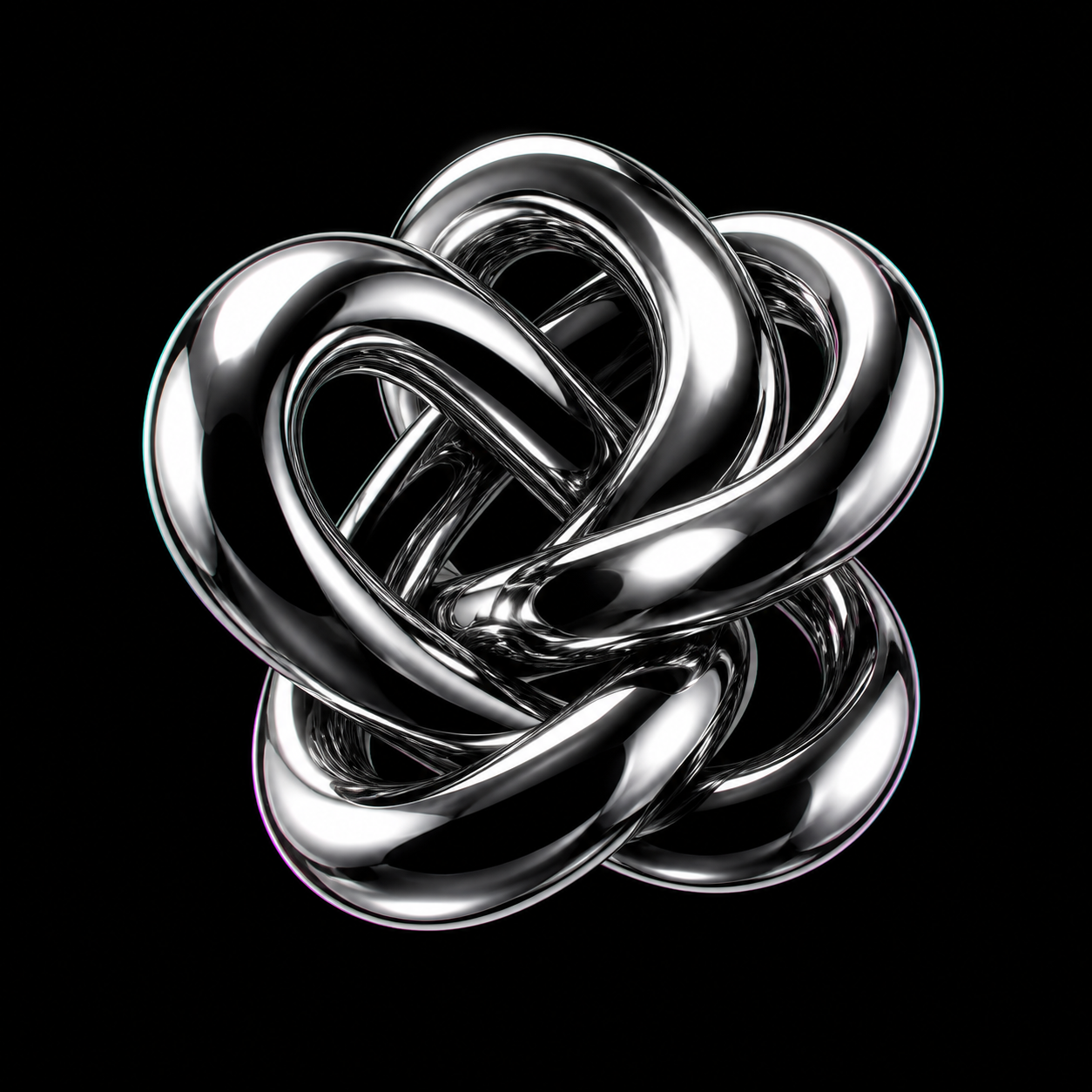
A surface that owns no color of its own — that only ever shows you what’s already in the room. Why does that read as more premium than color ever could?
Scene III — The Journey
The T-1000 teaches an audience to read morphing chrome as spectacle.
Brushed metal and glossy chrome become software’s default premium skin.
Flat design pushes chrome underground. It waits in motion graphics and album art.
Real-time 3D tools make procedural liquid metal cheap. Behance fills with it.
Apple ships Liquid Glass — reflective, translucent surfaces go mainstream again.
Liquid Chrome: the web-native, scroll-animated synthesis of both threads.
Scene IV — The People
No single studio invented this — it arrived when a generation of freelance 3D artists got free real-time renderers the same years Apple decided titanium was a headline feature.
Scene V — Design DNA
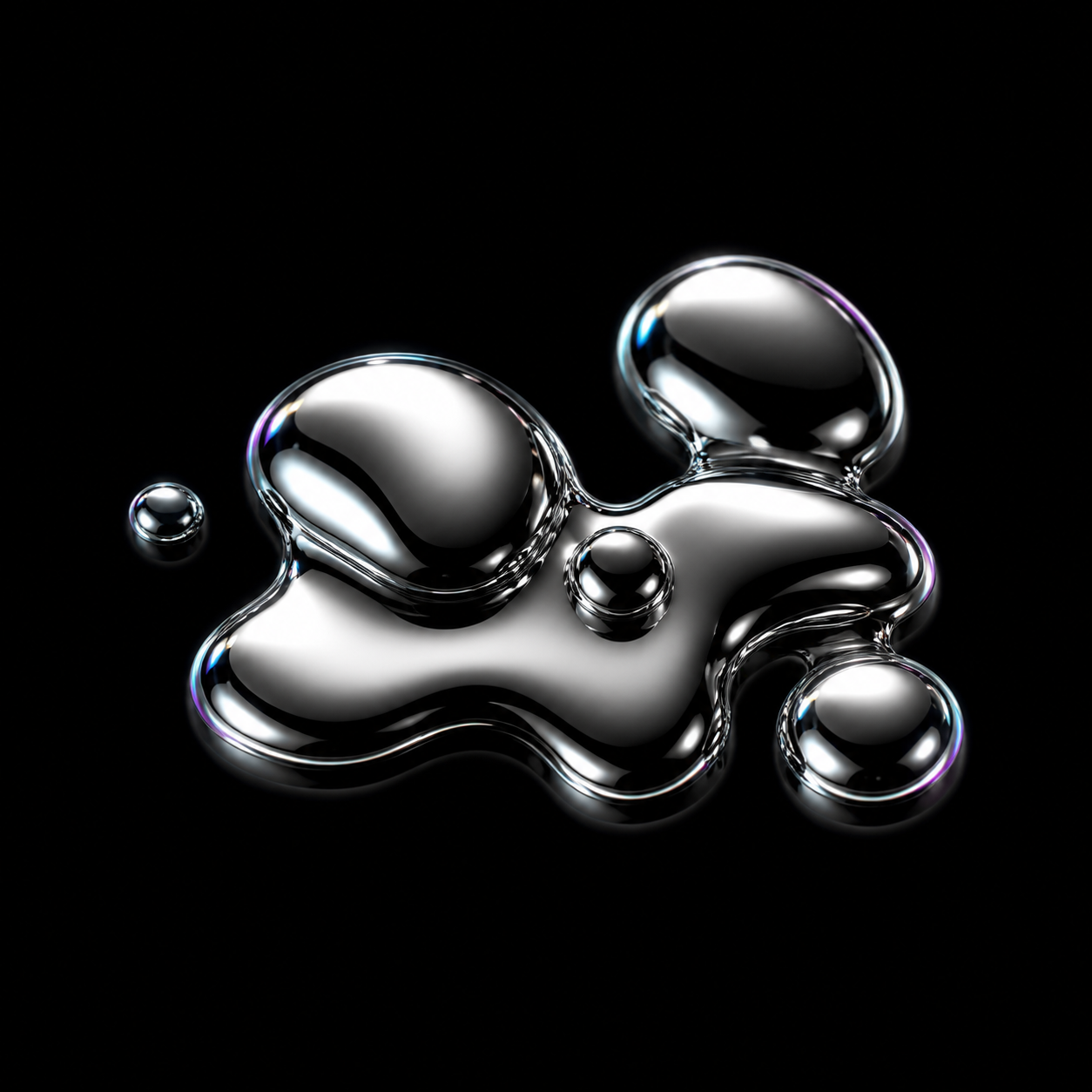
No fixed hue
The surface owns no color of its own — only what the room lends it.
One light source
A single point of specular light per object. Never ambient, never flat.
Restraint is the proof
One entrance, one hover response per section. Never stack more.
Never cover the read
The object bleeds past edges into empty space — never across type.
Scene VI — The Archive
Awwwards Honorable Mention, Jan 27 2026 — chrome hardware renders on a near-black stage.
Referenced for scroll-storytelling behavior, not literal chrome material.
Background/texture reference for the iridescent variant.